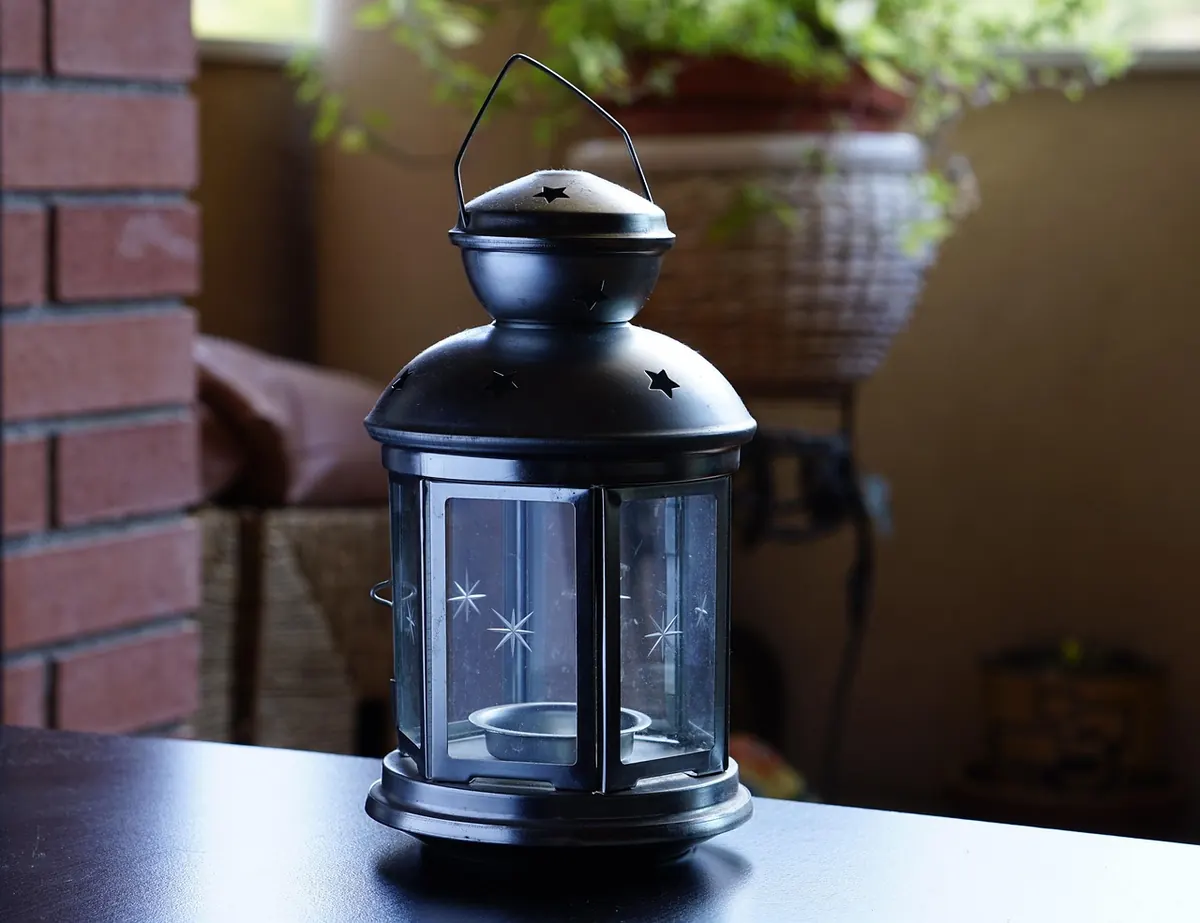
A patio at dusk has a particular problem. The light that felt generous at six o'clock is either too much or not enough by nine, and the usual response is to add another fixture, then another, until the terrace looks like a car park with cushions. Layering is the better answer: give every light a specific job, then combine those jobs so the whole space reads as one calm scene. It needs a little planning and almost no equipment beyond what most gardens already have.
Why Layers Work Better Than More Lights
Outdoor lighting has three jobs, and they are not interchangeable. When one fixture is asked to do all of them, it does none of them well. A bright floodlight above the table lights the plates, blasts the faces of your guests, and throws hard shadows across the lawn. Split that same amount of light into three considered parts and the space suddenly looks designed.
- Ambient — soft, even light that reveals the shape of the space and lets people move without squinting.
- Task — directed light where something actually happens: steps, a grill, a chopping board, a book.
- Accent — deliberate highlights on a tree, a wall, a planter or a lantern, giving the eye somewhere to rest.
Think of it as a pyramid. Ambient is the wide base that does most of the work, task lighting adds small pockets of usefulness, and accent is the narrow top — a handful of points, no more.
Start With Ambient: The Base Layer
Ambient light should be enough to walk from the back door to the table without watching your feet, and not much brighter than that. The goal is a gentle wash, not a pool of white on the paving.
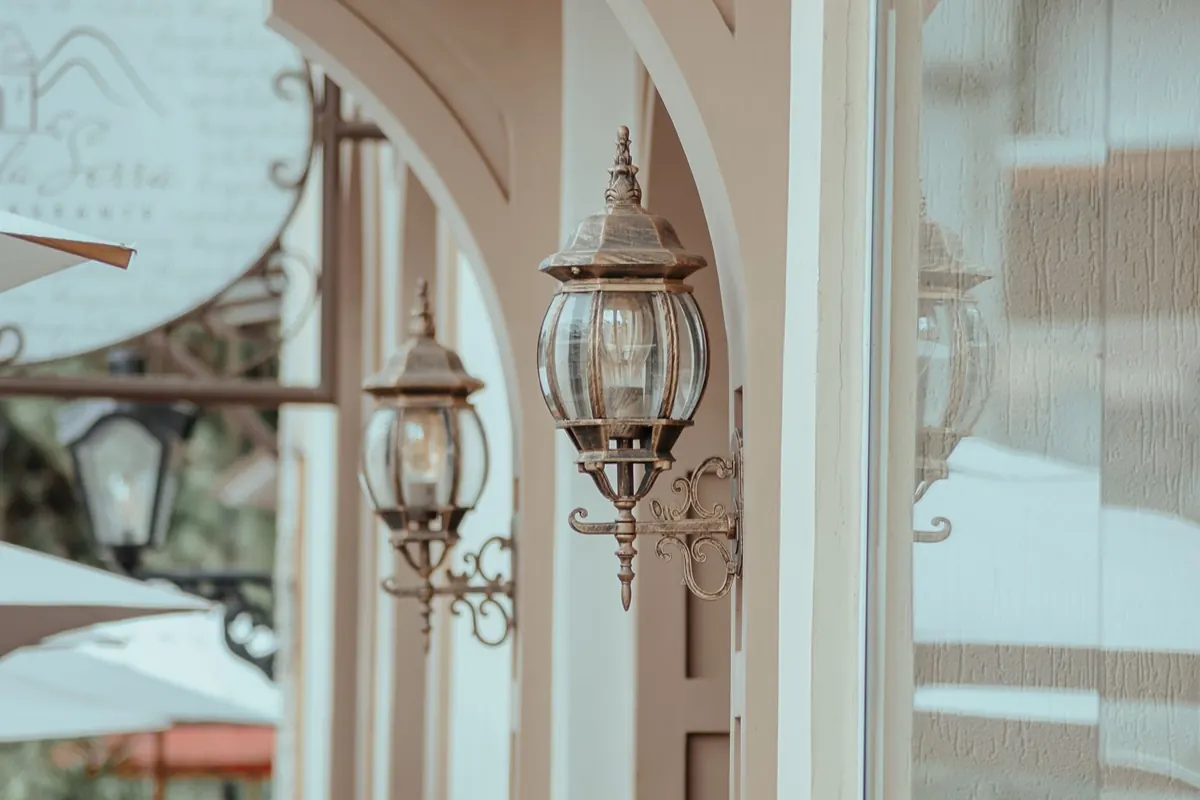
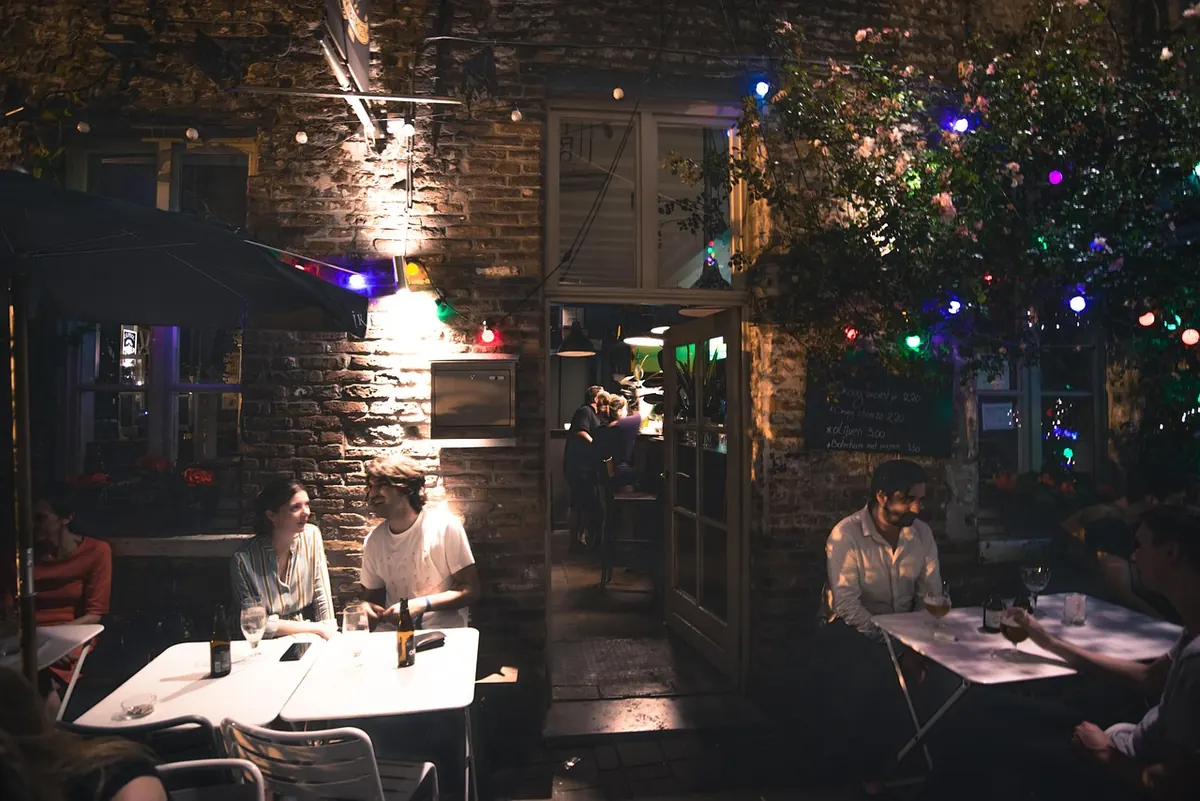
Three approaches work reliably. String lights strung on catenary wire above head height give an even glow and a pleasant silhouette. Wall lanterns on the house spread light across the facade and the first few metres of patio. Low post lights or small bollards along a boundary mark the edges of the garden without competing for attention. Any of these can carry the ambient layer on its own; two of them together is usually plenty.
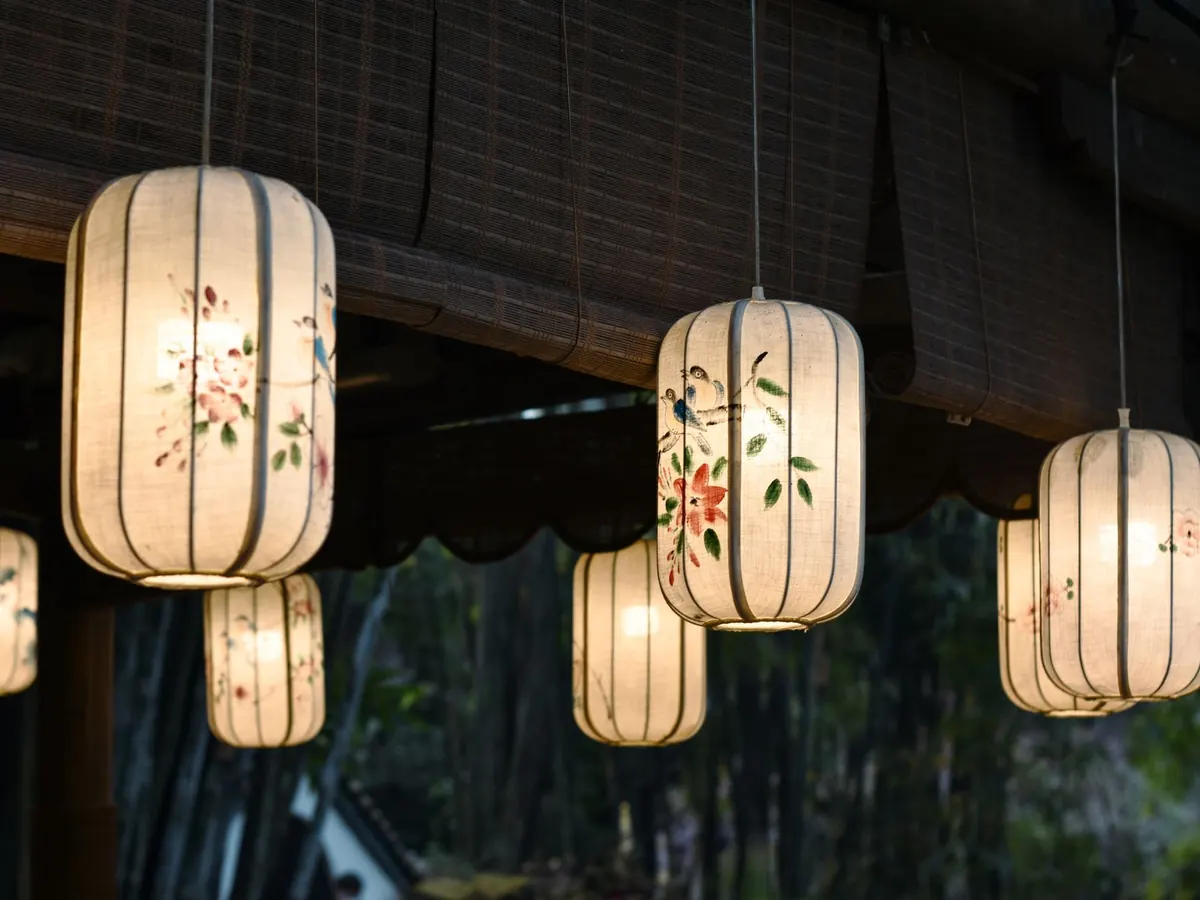
Two details matter more than the fixture itself. First, keep the source out of sight. If you can see the bare bulb from where you sit, it is doing the wrong job — look for opal glass, frosted diffusers, or a shade that sends light down and sideways. Second, choose a warm colour temperature, roughly 2700K to 3000K. Cooler white light flattens foliage into a grey-green mass and makes outdoor furniture look like office equipment.
If you can see the bulb from your chair, the light is doing the wrong job.
Task Lighting: Where the Work Happens
Task lighting is what stops a beautiful scheme from being annoying. It is also the layer people most often forget, then compensate for by turning the ambient up too high.
Paths and Steps
Steps are the priority. A low fixture at the side of each flight, aimed down onto the tread rather than out into the garden, is safer and more elegant than a bright lamp at the top. Shield the open side so the light does not hit a walker's eyes at the exact moment they need to judge a step. Bollards along a path should be spaced so the pools of light just touch; big dark gaps between them are worse than no light at all, because the eye keeps readjusting.
Dining and Cooking
Above a table, hang something low enough to light faces from above and slightly to the side — around 70 to 80 cm above the surface is a good starting point. The grill needs more focused, slightly cooler light than the table, and it needs it aimed at the cooking surface, not at the person standing there. A clip-on lamp or a small adjustable spotlight on a wall bracket is usually enough.
Accent Lighting: The Layer That Makes It Look Designed
Accent lighting is where restraint pays. Two or three focal points will make a garden feel intentional; twelve will make it feel like a shop display. Walk around after dark and pick the things worth showing: a tree with good bark, a textured brick wall, a large planter, a stone lantern, a sculpture.
Uplighting a tree from its base with a narrow beam is the classic move, and it works best when the fixture is buried in planting or hidden behind a stone so only the effect is visible. Grazing light across a wall at a shallow angle pulls out texture. For a tree, a beam of roughly 10 to 25 degrees keeps the light on the trunk and lower canopy; for walls and hedges, a wider spread suits better. Keep the accent fixtures on their own switch — you will not always want the full show.
Balancing the Layers
The practical secret to layering is switching. Put each layer on a separate switch, dimmer, or plug-in circuit so the garden can run ambient-only on a quiet evening and all three for a dinner. If everything is wired to one switch, you will never use the scheme the way it was meant to be used.
Then check the balance with a few honest tests:
- Stand at the far end of the garden and look back — the brightest point should be somewhere you intended.
- Sit where you usually sit. If a fitting glares into your eye, move or shield it.
- Photograph the space at night. Cameras exaggerate hotspots, which makes them a useful critic.
- Turn off the accent layer and see whether you miss it. If not, it is decoration, not lighting.
Consistency of colour temperature across all three layers matters more than most people expect. Mixing warm and cool lamps in the same view looks accidental, even when each fitting is lovely on its own.
Keeping the Load Manageable
Overloading a patio happens in two ways: visually, by adding one fixture too many, and electrically, by asking an outdoor circuit to do more than it should.
On the visual side, the fix is subtraction. Before buying anything new, turn off half of what you have and look again. Most gardens improve.
On the practical side, a few rules keep things safe and tidy. Use fittings rated for outdoor use — IP44 as a minimum for sheltered spots under a roof, IP65 for anything fully exposed — and keep cable connections off the ground where water collects. Do not chain multiple extension leads across wet paving. Low-voltage 12V garden systems, with the transformer kept indoors, are forgiving for accent and path lighting. Solar fixtures are fine for markers and gentle accents, but they rarely deliver reliable task light. And if the project needs a new outdoor socket or a dedicated circuit, that is the one part worth handing to a qualified electrician.
A Simple Plan for This Weekend
You do not need to do all of this at once. A workable sequence looks like this:
- Sit outside at the hour you would normally use the space, and note where it is too dark, where it glares, and where nobody ever walks.
- Set up ambient light only, then leave it for an evening. Adjust height and shielding before adding anything else.
- Add task light at the steps and the table. Test the step lighting by walking the path yourself, slowly.
- Choose one or two accents — a tree, a wall, a lantern — and aim them so the fixture disappears.
- Turn one thing off. If the scene still works, leave it off.
The result should feel like a garden that happens to be lit, rather than a lighting installation that happens to have plants in it. Warm, layered, a little uneven in the right places: that is what makes a terrace worth sitting on until late.
Photo: JosepMonter / Pixabay