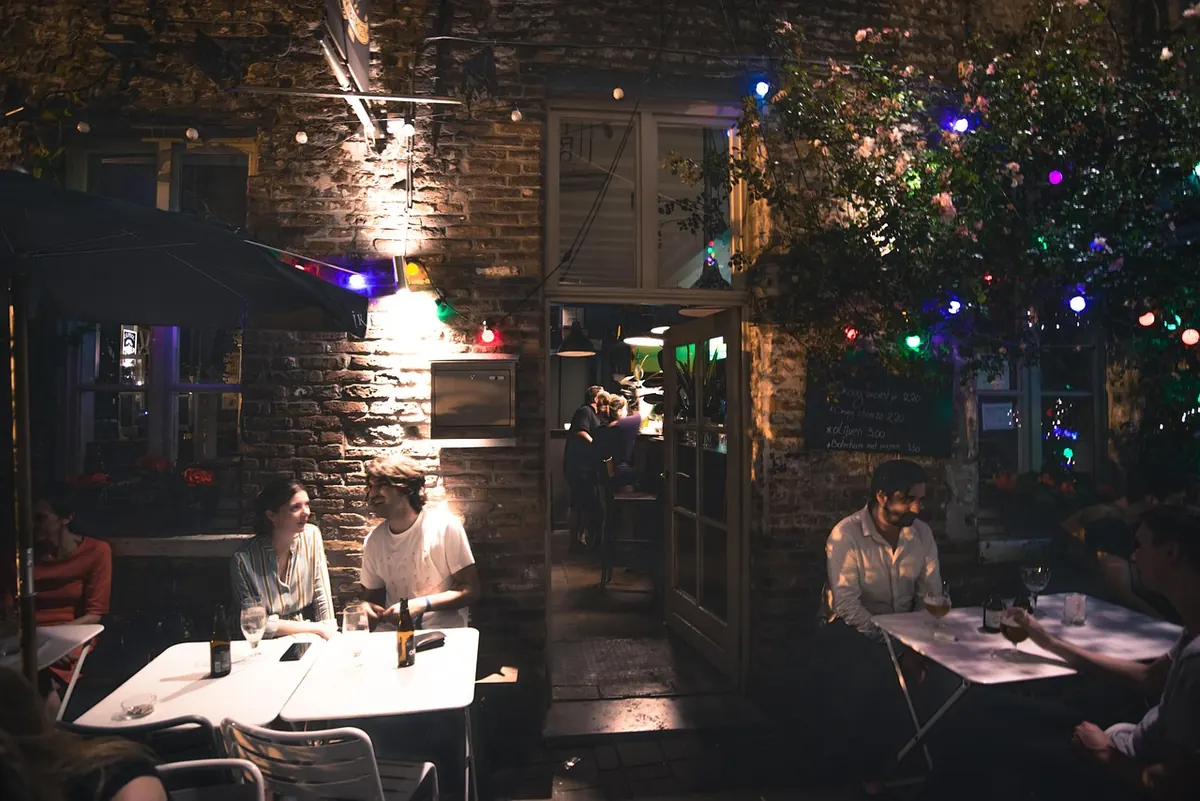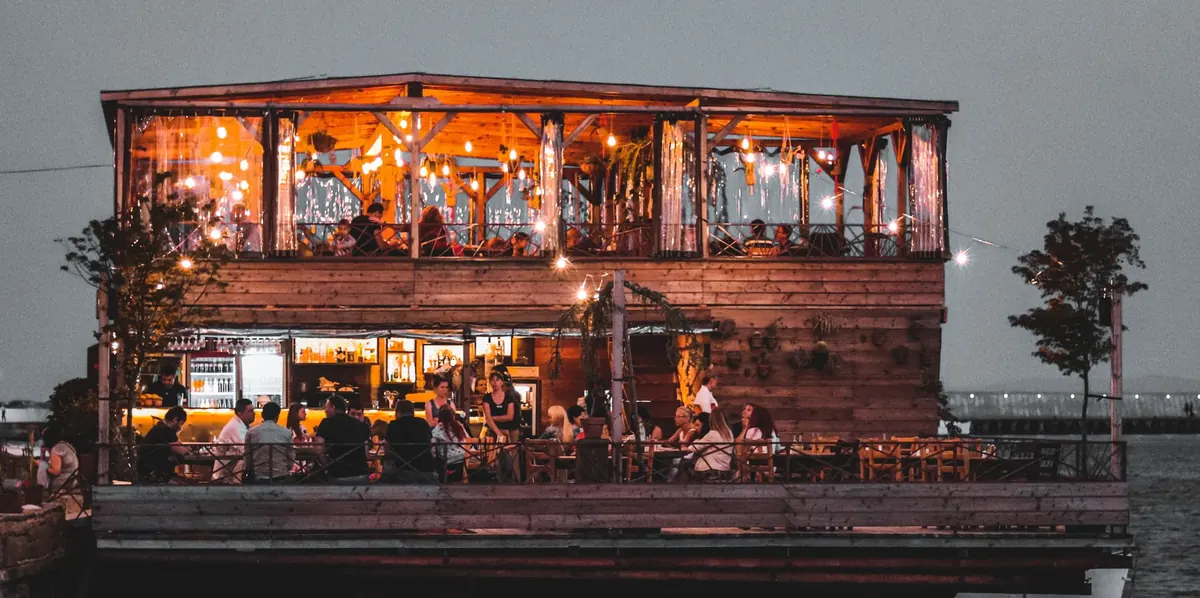
Summer evenings on a terrace have a way of stretching out: a second pot of coffee, a last slice of something cold, a conversation nobody wants to end. What decides whether that hour feels generous or slightly strained is rarely the furniture. It is the light. Lanterns do most of the work out there, and they do it best when you treat them as a plan rather than an afterthought. Run through this checklist once in late spring, then again in mid-July when the evenings finally get long enough to matter.
Start With the Table, Not the Perimeter
Most people light the edges of a terrace first and leave the table until last. Reverse that. The table is where hands move, glasses land, and faces turn toward whoever is talking, so it deserves the most careful arrangement on the whole terrace.
Three lanterns usually beat one. Put a small lantern at the centre, a slightly taller one on a side table or stool just off the corner, and a third on the sill or wall behind the seating. Keep the flame or bulb below the eye level of a seated guest. Light that shines straight into someone's face makes them squint and quietly turns the chair away from the group.
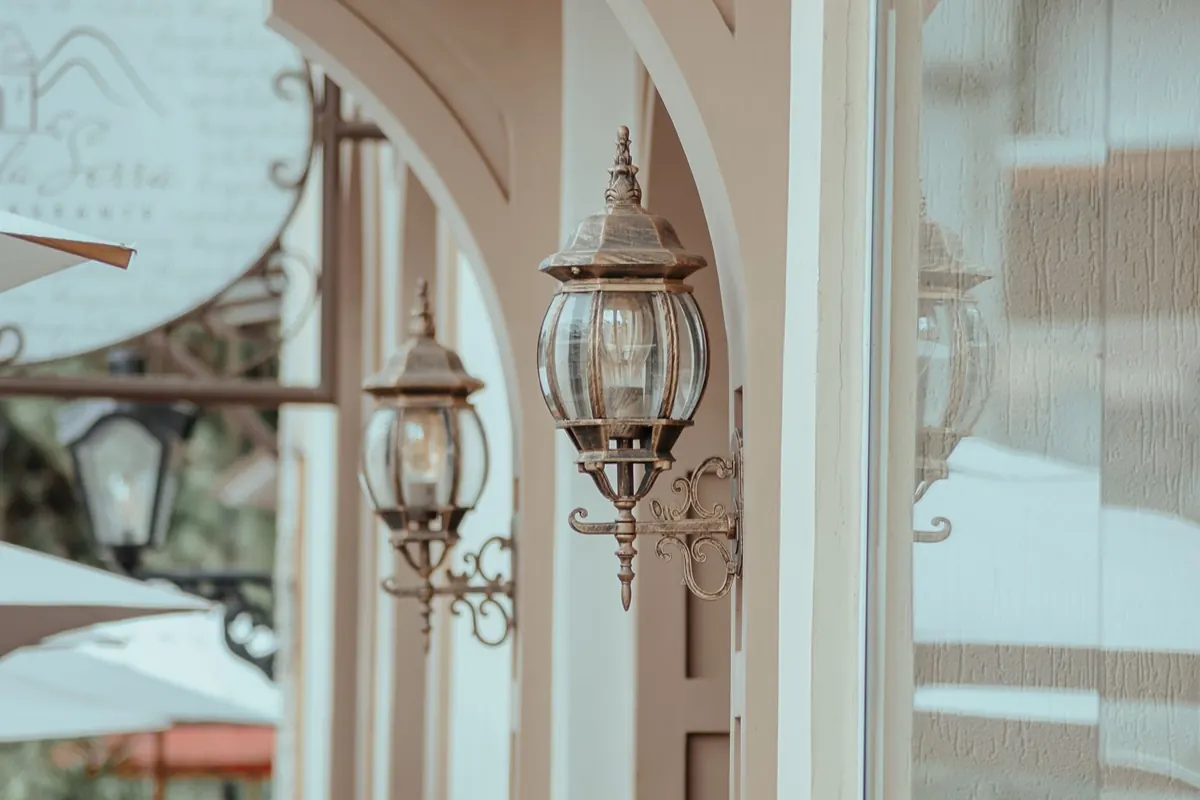
Glass matters more than size. A clear chimney gives a crisp, bright pool; frosted or amber glass spreads a softer glow and hides the flicker slightly. For a long table, two or three small lanterns spaced along the centre line read better than one large statement piece, and they let people reach across without dodging anything.
Then Give the Edges a Little Light
Once the table is settled, look at the two journeys that happen all evening: from the kitchen door to the table, and from the table to the far corner where someone always wanders off to talk. Those routes need low, quiet guidance, not spotlights.
Floor lanterns earn their place here. A tall lantern of sixty to eighty centimetres, with a weighted base so an evening breeze cannot tip it, flanking a step or the doorway frame does two jobs at once: it marks the threshold and it makes the architecture look considered. On a small balcony, two floor lanterns either side of the door are often all the vertical interest you need. Keep their light low and shaded so it reaches the ground and the toes of the steps, not the eyes of anyone sitting down.
Build the Evening in Layers
Good terrace lighting is three thin coats, not one thick one.
The base layer
Low, wide, and unchanging: floor lanterns, a lantern on the ground by a planter, a light inside a glazed pot. This layer stops the terrace from going black at the far end and lets everything else sit on top of it.
The working layer
Whatever lets people eat, pour, read a label, or find a dropped fork. This is the table cluster, plus one lantern on a serving tray or side table. It should be the brightest thing out there, and it should be small enough that nobody notices it as a light source.
The accent layer
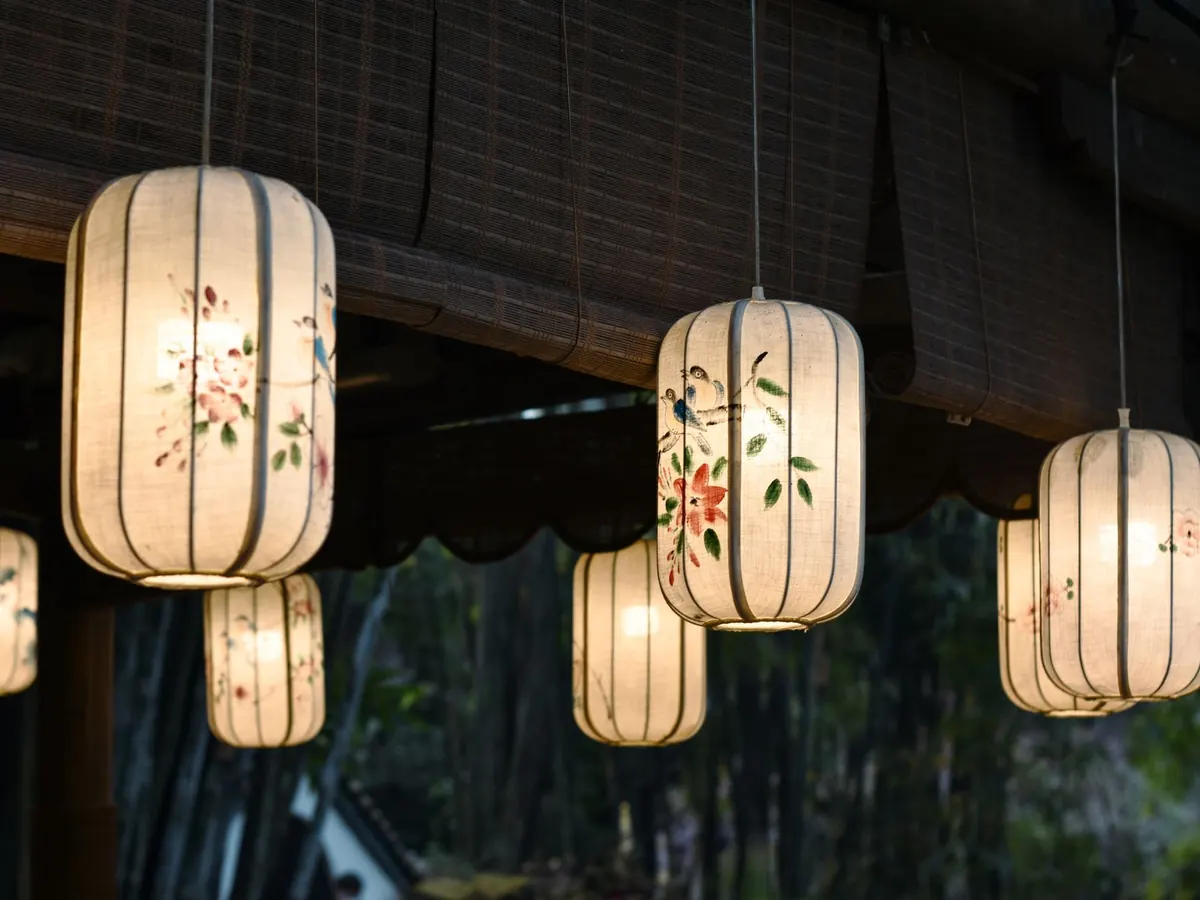
The one detail guests remember. A hanging lantern in a branch, a lantern hooked on a wall bracket, a single candle lantern on the balcony rail. One or two are charming; five start to look like a shop display. If your lanterns are electric, warm white bulbs around 2700K sit comfortably with candlelight, and a dimmer on a single circuit does more for the mood than any extra fixture.
The Seasonal Checklist
- Walk the terrace at dusk, not in daylight. Take a candle or a small lantern with you and stand where guests will sit. You will spot the glare and the dark step immediately.
- Count seats, then count lights. As a rough guide, one small light source per two seated guests, plus the route lighting. Fewer, better placed, always looks more intentional.
- Test every lantern. Hinges, handles, glass panels, candle cups, cables, batteries. A lantern that will not open smoothly will not get used in August.
- Wash the glass. Soot, dust, and hard-water marks cut the glow by a surprising margin. Warm soapy water, a soft cloth, and a full dry before refitting.
- Find your wind direction. Note where the evening breeze usually comes from and put enclosed or hurricane-style lanterns there. Open lanterns belong on the sheltered side.
- Choose one dark corner and leave it dark. A little shadow gives the eye somewhere to rest and makes the lit areas feel warmer than they are.
- Set up a lighting station. One tray or drawer with long matches, a spare candle, spare batteries, and a snuffer. Nobody wants to hunt for a lighter with a plate in one hand.
A word on candles
Candles are lovely and unforgiving. Never leave them burning unattended, keep them well away from fabric runners, paper napkins, and low branches, and place them where children and pets cannot reach across a table into the flame. If the terrace catches a steady breeze, use an enclosed lantern or switch to a battery candle rather than fighting it with a glass chimney.
Soft Accents That Do the Quiet Work
Lanterns look better when they have something to reflect off. A pale linen runner, a cream tablecloth, a light-coloured tray under a lantern — all of these bounce light back up and make three lanterns read like six. Dark timber and charcoal surfaces swallow it, so if your table is dark, add a light tray or a pale mat and watch the whole arrangement brighten without a single extra flame.
Keep the accents low and unbreakable. A shallow bowl, a jug of water with mint, woven placemats, one small vase. Anything tall on the table becomes an obstacle and casts a shadow across the plates. Put a mirror or a polished tray beneath a lantern and the glow doubles for almost no effort.
Wind, Weather, and the Small Practicalities
Outdoor lanterns live a harder life than indoor ones, so a few habits pay off. Bring fabric-shaded and rattan lanterns in during heavy rain and through the hottest weeks, since sun fades dyes and dries out natural fibres. Empty water from lantern bases after a storm so metal does not rust from the inside. Coil cables loosely rather than wrapping them tight around a hook.
For anything permanently wired — sockets, wall lights, a circuit for the terrace — have the work done by a qualified electrician and use fittings rated for outdoor use. Extension leads trailing across a walkway are a trip hazard, and summer evenings usually involve at least one guest carrying something hot.
If insects are a nuisance, move the brightest source a couple of metres away from the table rather than adding more light to it. A lantern on the far wall will pull attention away from the plates while keeping the table comfortably lit.
The Five-Minute Reset Before Guests Arrive
Light the lanterns before anyone arrives, while the sky is still holding some colour. A terrace that is already glowing when the first guest steps out feels like an invitation; one that is lit in a flurry after everyone sits down feels like a task. Walk the route from the door to the table once with a lantern in hand, checking for glare, wobbling bases, and anything that has crept into the pathway since spring. Trim a candle if it has grown tall, top up the batteries, and put the snuffer where you will actually find it at midnight. Then leave it alone, sit down, and let the evening do what it does.
Photo: Akshansh Singh / Pexels